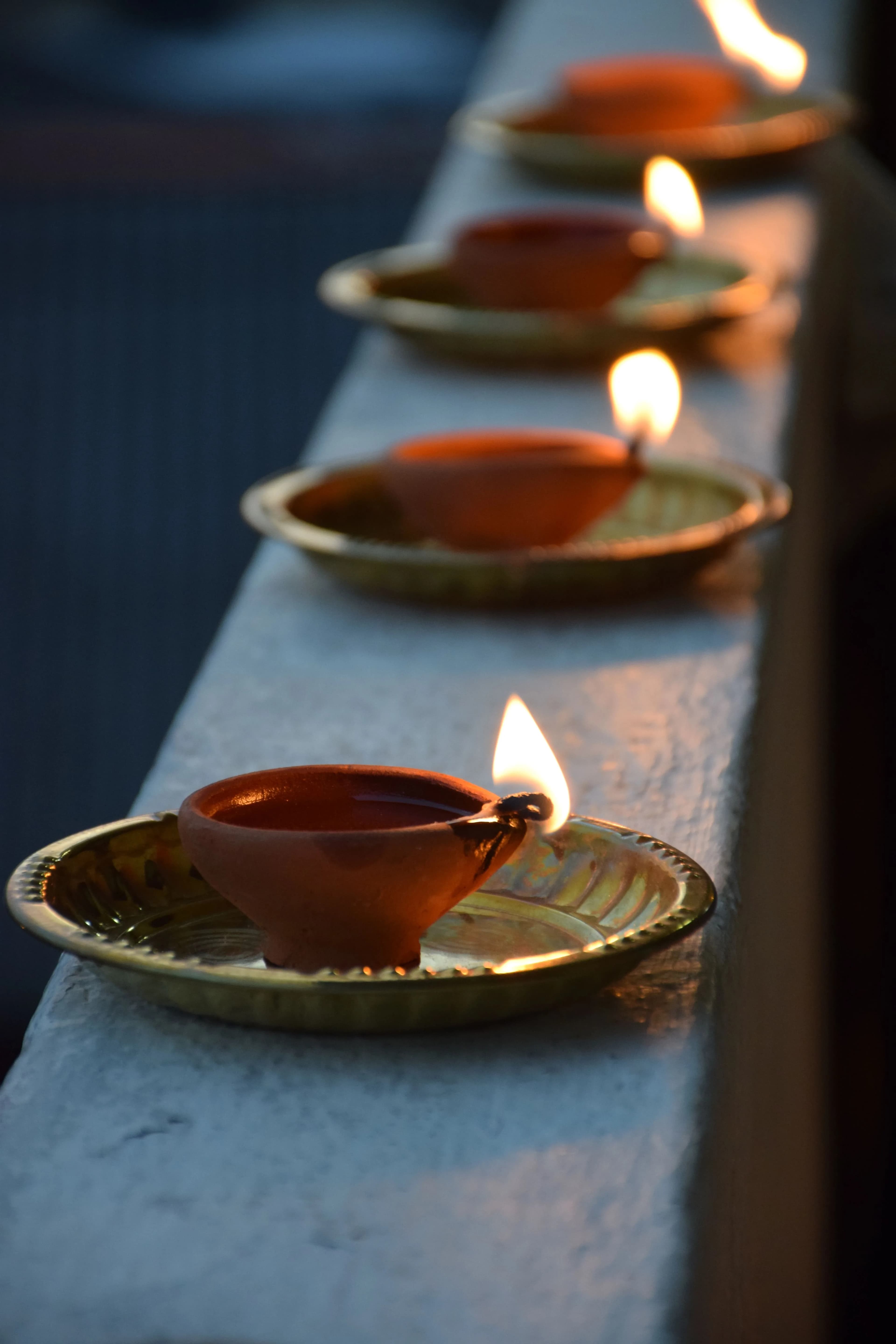
The Story of Diwali, the Festival of Lights
By Archit Bhargava ·
Diwali, or Deepavali, means "a row of lights," and for five days every autumn, homes across South Asia and the diaspora are lit with diyas, candles, and strings of lights against the year's darkest nights.
The most widely told origin comes from the Ramayana: after fourteen years of exile and a battle to rescue his wife Sita from the demon king Ravana, Lord Rama returned home to Ayodhya. The citizens lit oil lamps along every path to welcome him back — a homecoming so joyful it's been re-lit every year since.
Regionally the story shifts. In Bengal, the festival centers on Kali, goddess of transformation and protection. Jain communities mark it as the day Mahavira attained enlightenment. Sikh communities celebrate Bandi Chhor Divas, honoring Guru Hargobind Ji's release from imprisonment. Different stories, same throughline: light overcoming darkness, good overcoming evil, knowledge overcoming ignorance.
Across all of them, the customs rhyme: homes are cleaned and decorated, rangoli patterns appear at doorsteps, families gather for sweets and gifts, and the night sky fills with fireworks. It's a festival built for sharing — which makes it one of the easiest to send a card for, even from far away.
This article was drafted with the help of AI and reviewed and edited by Archit Bhargava.
Make a card for Diwali
Design and send one in a few minutes.