Why We Celebrate Raksha Bandhan
By Archit Bhargava ·
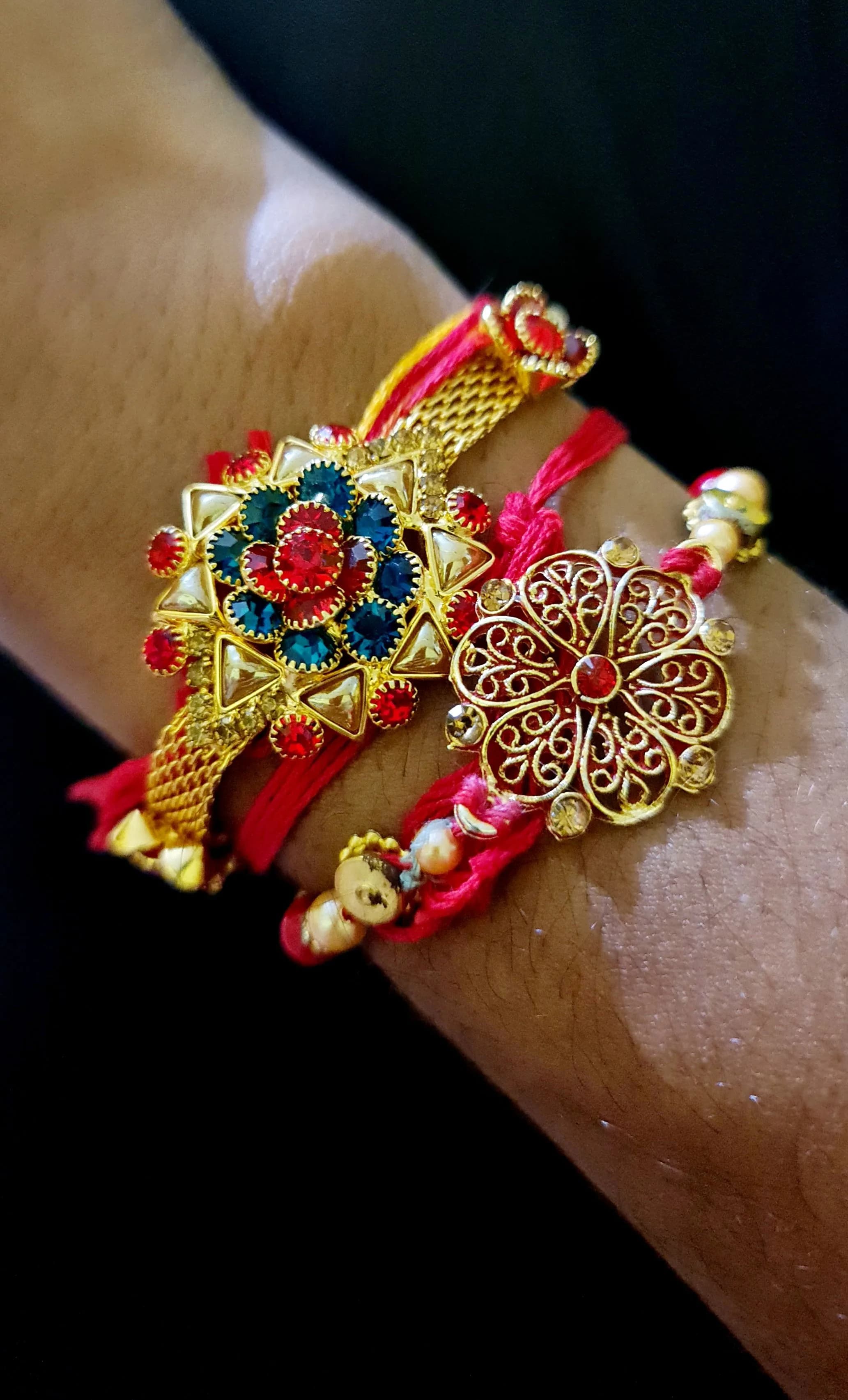
Raksha Bandhan, literally "the bond of protection," falls on the full moon of the Hindu month of Shravana, usually in August. At its center is the rakhi: a decorative thread a sister ties around her brother's wrist, a promise of love on one side and protection on the other.
The festival's roots stretch back through several retellings. One traces it to queen Karnavati of Mewar, who sent a rakhi to the Mughal emperor Humayun asking for his help defending her kingdom. Another, from the Bhavishya Purana, tells of Indrani tying a protective thread on her husband, the god Indra, ahead of a great battle against the demons, said to have shifted the tide in his favor. What survives across every version is the same idea: a thread that turns a request for protection into an unbreakable bond.
Today the ritual has grown well past sibling relationships by blood alone. Cousins, close friends, and found family tie rakhis just the same, and the exchange usually comes with sweets, a small gift, and a promise kept between two people who look out for each other.
It's also, at heart, a day about showing up. A card, a message, or a rakhi sent across distance says the same thing a knot on a wrist does: I've got you, wherever you are.
This article was drafted with the help of AI and reviewed and edited by Archit Bhargava.
Make a card for Raksha Bandhan
Design and send one in a few minutes.