New Year: History, Traditions and How the World Celebrates
By Archit Bhargava ·
New Year marks the start of a new calendar year. In most of the world it falls on 1 January, and the night before, New Year's Eve, is celebrated with countdowns, fireworks, music and gatherings. It is one of the few festivals shared by people of almost every faith and background, and it is a natural moment to look back, say thank you and begin again.
Quick facts
- New Year's Day: 1 January in the Gregorian calendar, used for civil life in most of the world
- New Year's Eve: 31 December, the night of the countdown
- Origin of the date: Julius Caesar's calendar reform, from 45 BCE
- Key traditions: countdowns, fireworks, resolutions, "Auld Lang Syne", first footing
- Lucky foods: grapes in Spain, lentils in Italy, soba noodles in Japan
- Other new years: Ugadi, Gudi Padwa, Baisakhi, Lunar New Year, Nowruz and more
When is New Year celebrated?
New Year's Day is 1 January, and the celebrations start on New Year's Eve, 31 December. Time zones mean the new year arrives in the Pacific islands first and in the Americas hours later, so the celebrations roll around the globe over a full day. New Year comes one week after Christmas, which we cover in our guide to why we celebrate Christmas.
Many cultures also keep their own New Year on other dates, which we look at further down.
Why does the New Year start on 1 January?
People have marked the start of a year for about four thousand years. The Babylonians held an eleven-day festival called Akitu in spring, and other ancient cultures tied the new year to harvests or the stars.
The date of 1 January goes back to ancient Rome. Julius Caesar's calendar reform started the year on 1 January from 45 BCE, partly in honour of Janus, the two-faced god of beginnings, from whom January takes its name. The calendar was later refined by Pope Gregory XIII in 1582 into the Gregorian calendar most of the world uses today.
How is New Year celebrated around the world?
- Scotland: Hogmanay is the biggest night of the year. After midnight, "first footing" means being the first to cross a neighbour's threshold, bringing small gifts such as coal, shortbread or whisky for luck, and everyone joins hands to sing "Auld Lang Syne", a song based on a poem by Robert Burns.
- Spain: Eating twelve grapes, one with each chime of midnight, is said to bring twelve lucky months.
- Denmark: Friends smash old plates against each other's doors, since a big pile of broken china means plenty of friends.
- Brazil: People dress in white for peace and, on the beach, jump seven waves while making wishes.
- Japan: Temples ring their bells 108 times, a tradition called Joya no Kane, to let go of the worries of the old year.
- Ecuador: Families burn año viejo, effigies representing the old year, at midnight.
- Greece: A vasilopita cake is baked with a coin hidden inside, and the person who finds it is said to have good luck all year.
- Philippines: Round shapes, including fruit and polka dots, are believed to bring prosperity.
- United States: The Times Square ball in New York has been dropped at midnight since 1907.
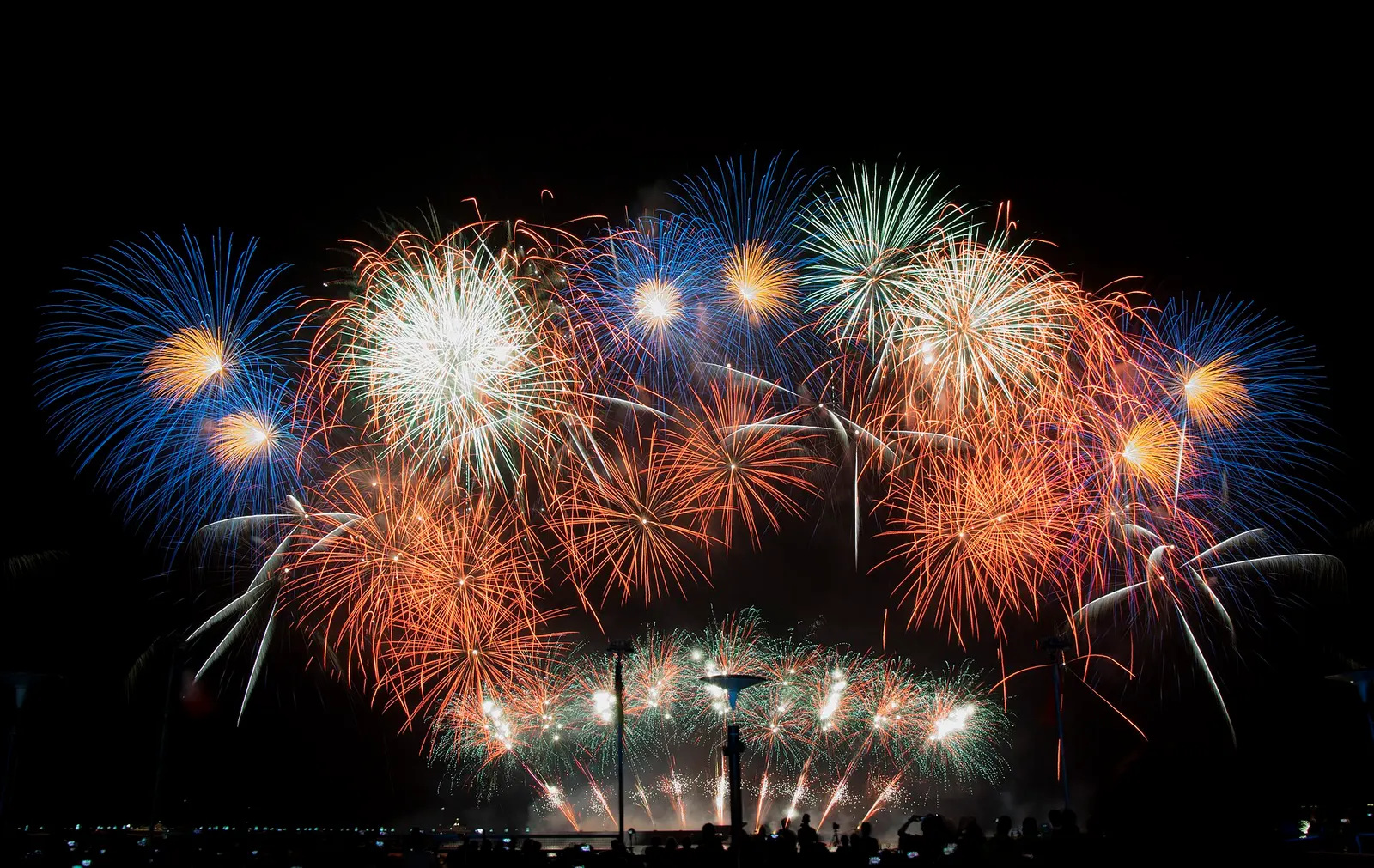
- Australia: Sydney Harbour's fireworks are among the most watched New Year displays in the world.
What food is eaten for good luck at New Year?
Many cultures eat symbolic foods at New Year. In Italy and Brazil, lentils represent coins and prosperity. In the southern United States, black-eyed peas are eaten for luck. In Japan, long toshikoshi soba noodles are eaten on New Year's Eve for a long life, and in Spain it is the twelve grapes at midnight. Round fruits and sweets are popular in the Philippines.
Are there other New Years?
Yes. 1 January is only one of many. In India alone, communities celebrate Ugadi and Gudi Padwa in spring, Baisakhi and Pohela Boishakh in mid-April, Vishu in Kerala, and the Gujarati New Year the day after Diwali. Lunar New Year, Nowruz, Rosh Hashanah and the Islamic New Year follow their own calendars. Each one shares the same idea: a pause to look back and begin again.
Why do people make New Year resolutions?
Making promises at the start of a year is an old habit, often traced back to the Babylonians, who are said to have promised their gods to repay debts and return borrowed things. Today a resolution might be exercise, saving money, learning something new or calling family more often. A card with a short, honest note is a small resolution that is easy to keep.
New Year wishes to send
- "Happy New Year! May the year ahead be your best one yet."
- "Wishing you health, happiness and new beginnings in the new year."
- "Here is to fresh starts, new adventures and more time with the people you love."
- "Thank you for being part of my year. Wishing you a wonderful new one!"
- "May every day of the new year bring you something to celebrate."
How can I send a New Year card?
The easiest way is a digital card. On Wishrsha you can pick a template, add your own message and photo, and share the card as a single link on WhatsApp, email or any messaging app. No printing, no postage, and it arrives instantly, wherever the person is.
If you want to thank clients or wish a whole team a happy new year, you can send personalised cards in bulk with each person's name on their card.
Frequently asked questions
Why does the New Year start on 1 January?
Julius Caesar's calendar reform made 1 January the start of the Roman year from 45 BCE, and the date stayed when Pope Gregory XIII refined the calendar in 1582. It is now the civil new year in most countries.
What does "Auld Lang Syne" mean?
"Auld Lang Syne" is a Scots phrase that roughly means "old long since", or "times gone by". The song, based on a poem by Robert Burns, is traditionally sung at midnight on New Year's Eve to remember old friends.
What are some New Year traditions around the world?
Common traditions include fireworks and countdowns, eating twelve grapes in Spain, wearing white and jumping waves in Brazil, ringing temple bells 108 times in Japan, and first footing in Scotland.
When is the first New Year celebrated each year?
Because of time zones, the new year arrives first in the Pacific islands and then moves westward, so places such as New Zealand and Australia celebrate many hours before Europe and the Americas.
Do all cultures celebrate New Year on 1 January?
No. Many communities follow their own calendars, such as Lunar New Year, Nowruz, Ugadi, Gudi Padwa, Baisakhi and Pohela Boishakh, each with its own date and traditions.
Further reading
Photos: Vernon Raineil Cenzon and Nienke van Tellingen, shared under CC0 (public domain) via Wikimedia Commons.
This article was drafted with the help of AI and reviewed and edited by Archit Bhargava.